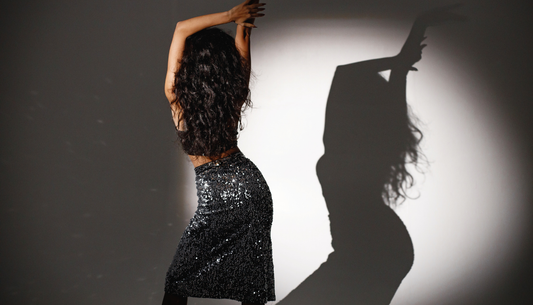
How to keep your muscles warm and your lines visible at the same time?
In many U.S. studios, dancers often face a tough choice. They must stay warm to move well or remove layers to check their form. When it's chilly, dancers' muscles can quickly lose heat, making it hard to keep up between moves.
But dancers can't ignore the mirror's feedback. It's key to see dance lines to check turnout, knee tracking, and more. This helps catch small mistakes before they become bad habits.

The aim is to find warmth that enhances movement, not hides it. That's why the right warm-up pants for ballet and contemporary are so important. They should keep muscles flexible and warm without obscuring alignment.
This is also about feeling confident on stage. Lightweight pants that fit well can keep blood flowing. This lets dancers see every detail of their movements.
We'll explore how the body warms up and why joints need to be ready. We'll also look at how to choose clothes that are warm, yet let you move freely. We'll end with a solution from R·DESIGN.
Why dancers need muscle warmth without sacrificing visible dance lines
In class, dancers need to warm up their muscles. But they also want to see clean lines in the mirror. If too many layers hide parts of the body, it's hard to correct alignment right away.
The goal is to stay warm enough to move well. At the same time, dancers want to keep their lines clear for better technique.
Early in class, the body is cold and timing can be off. A good warm-up helps prevent injuries without making dancers look like they're wrapped in fabric.

How warming up raises body temperature and supports blood circulation
A warm-up's main job is to raise body temperature and improve blood flow. With more blood, muscles respond better, and movement feels smoother. This makes it easier to move smoothly and control movements better.
As the body warms up, you can feel where your body is sooner. This helps keep your movements consistent, including turnout and spacing.
Why 5–10 minutes of warm-up helps performance and may reduce injury risk
Five to ten minutes can make a big difference in how you feel during the first combinations. You warm up faster and move better sooner. This can improve your technique and help prevent injuries, which is important when doing jumps or quick turns.
A dynamic warm-up that mirrors the steps you'll do helps wake up your nervous system. When your mind and body are in sync, you move better and make fewer mistakes.
How joint prep supports studio technique, precision movement, and body alignment
Joint prep is more than just stretching. As you warm up, your joints get ready for movement. This makes your movements smoother and more efficient.
Better joint prep also helps with landing and absorbing shock. This makes it easier to keep your body aligned correctly. When you're aligned right and your movements are precise, you're less likely to get hurt.
Warm-up pants for ballet and contemporary, Muscle warmth for dancers
In class, dancers aim to stay warm and clear. They need warm-up pants that keep muscles warm but don't hide important details. This is key for good technique.
As the room gets warmer, blood flows better and joints move more easily. The right layers keep you warm and let you see your movements clearly. This is important for quick changes from barre to center.

What dancers actually need: thermal regulation plus mirror feedback
Dancers need two things: thermal regulation and mirror feedback. If you can't see your turnout, knee tracking, and weight placement, small mistakes can add up.
Good dancewear should be thin and let you see your legs clearly. This is important for quick corrections, even in crowded studios.
- Warmth that supports readiness between combinations
- Mirror feedback for clean alignment and line clarity
Solving the “bulky vs. warm” dilemma with slim-fit warm-up gear
Baggy clothes can make it hard to see your joints. Slim-fit gear keeps close to your legs, making it easier to see your movements.
Choose dancer-designed essentials that are light but warm. This way, you stay warm without feeling weighed down during movements.
How a streamlined silhouette supports a professional dancer silhouette in class
A slim fit lets you see your body's shape clearly. This is important for looking professional in the mirror and while moving. It also helps teachers give better feedback.
R·DESIGN, created by Anni Rong and Ruby Tao in Shanghai, offers functional warm-ups with an artistic touch. They are made for dancers who want precision and presence without giving up style.
What “warm” really means in a dance warm-up: mobility, flexibility, and stability
In dance, feeling warm is more than just being cozy. It's when your joints move smoothly and your steps look clean. When you're warm, your body responds fast and moves with precision.
Mobility vs. flexibility vs. stability and why dancers need all three
Flexibility lets muscles and tendons lengthen, often without much effort. Certified strength and conditioning specialist India McPeak says it's like reaching for a long split shape easily.
Mobility is about moving your joints actively with your muscles. Stability is about keeping a position or path, like holding a plank or balancing on one foot.
Dancers need all three because they work together. Without stability, mobility can strain you. Without mobility, stability feels like tight brakes. The goal is to move smoothly with control, not just make big shapes.
- Core parts of mobility include muscle strength, flexibility, joint health, motor control, proprioception, and agility.
How mobility training supports range of motion, control, and injury resilience
Good mobility training helps you use what you already have and build more safely. This is key in moves like pliés and landings, where timing and alignment are everything.
When joints move well, forces spread out, reducing the risk of injury. This is great for dancers who do the same moves over and over. It also helps you control your movements better, as you're not just falling into a position.
Consistency matters: short, frequent mobility sessions vs. occasional long sessions
For most dancers, being consistent is more important than how hard you work. Andy Speer suggests doing 5–10 minutes, five times a week, instead of one hour once a week. These short sessions keep your body ready for class.
India McPeak also talks about "movement snacks" - short sessions throughout the day. If you want more, add two to three longer sessions of 15–30 minutes. But always remember to keep stability in mind so the new motion stays useful.
Dynamic warm-up moves that translate to pliés, lunges, and jumps
A good dynamic warm-up should feel like class, not a separate workout. When the patterns match what you’ll do at the barre and center, your timing sharpens and your joint readiness improves.
That’s where dancer injury prevention starts: prepare the tissues, wake up balance, and rehearse clean mechanics. Done well, this approach supports movement efficiency and helps prevent dance injuries without adding fatigue.
Leg swings
Leg swings warm the glutes, hips, and ankles while you steady on one leg. That single-leg control carries over to battement and quicker transitions.
- Stand hip-width, lightly holding a barre or wall if needed.
- Swing forward and back, starting small, then increase range for 15–30 seconds per side.
- Repeat side-to-side to wake up the outer hip and foot placement.
Bodyweight squats and walking lunges
Bodyweight squats reinforce the same tracking you need in pliés and in quiet landings. Keep your torso tall, let the knees follow the toes, and press through the heels for 15–30 seconds.
Walking lunges build control in the split stance used in traveling steps and jump prep. Take a big step, aim both knees toward 90 degrees, and keep the front knee stacked over the ankle for about 40 seconds, alternating sides.
Glute bridges, lateral/crab walks, and good mornings
Glute bridges switch on glutes and hamstrings so the pelvis stays steady when choreography speeds up. Press through the heels, keep a neutral spine, and lift to a straight line from chin to knee for 15–30 seconds.
Lateral or crab walks, often with a short band around the ankles, target the hips that protect knee alignment. Keep tension on the band and take 10 steps each way (or 15 seconds per side) with knees in line with toes.
Good mornings prime the posterior chain—glutes, hamstrings, and back—so you hinge with control instead of collapsing. Use bodyweight or a dowel, soften the knees, hinge at the hips, and repeat for 15–30 seconds.
World’s greatest stretch
World’s greatest stretch opens the hips and adds thoracic rotation before bigger phrases. From a deep lunge with hands inside the front foot, hold 3–5 seconds, then rotate by reaching one arm up; switch sides.
This mix of heat, balance, and rotation supports joint readiness before allegro and sustained extensions. It also supports dancer injury prevention by organizing the body for speed, control, and repeatable movement efficiency.
Breathable dance fabrics and high-tech textiles: how to stay warm without bulk
As you warm up, your clothes need to keep up. They should keep you warm but let heat out quickly. This is why breathable fabrics and high-tech materials are key, both in class and on stage.
Breathable warmth vs. overheating: why airflow matters during repeated combinations
After a few rounds of dance, you might feel too hot. This can make your clothes feel damp and your waistband slip. Breathable fabrics help you stay cool by letting air in.
Choose fabrics that move moisture away from your skin and dry fast. This keeps you comfortable during long dance sequences.
Choosing super light and thin dancewear for a second-skin feel and flexibility
Light and thin dancewear is great for keeping warm early on. It should stretch and snap back into shape. This lets you move freely without restriction.
- Low bulk at joints to keep ankles, knees, and calves clean in the mirror
- Four-way stretch for lunges, tilts, and grounded transitions
- Shape retention so the fit stays consistent from first tendu to final run
Modern dance fabrics that balance durable dance gear needs with non-bulky drape
Dancewear in the U.S. faces a lot of wear and tear. Modern fabrics are tough but don't add bulk. They keep you looking good even in rehearsal clothes.
Good dance gear should last many washes and not pill easily. It should also look sleek with smart patterns. This way, it keeps you warm where you need it most.
Fit and design details that keep lines readable in the mirror
In class, the goal is simple: keep visible dance lines clear enough for fast corrections. When fabric shifts or pools, it can hide knee tracking and blur hip placement. That’s why minimalist dancewear often wins, as it makes it easier to check your form in the mirror.
The best slim-fit warm-up gear stays close without feeling tight. Look for a tapered leg that reduces extra fabric at the knee. This lets you spot turnout and alignment in pliés. At the ankle, a clean finish helps you read articulation and foot speed, instead of watching hems bounce.
A streamlined silhouette also supports body awareness during mobility work. If you’re training control and range of motion, you need clean proprioceptive cues from what you see and feel. When the cut follows the calf and thigh, it’s easier to check calf engagement and quad support in real time.
- Contoured taper for clearer knee alignment and hip-to-knee tracking
- Minimal bulk around the knee and ankle for sharper ankle articulation
- Secure waistband that stays put, so hip placement is easier to monitor
Design can also look polished outside the studio. For a dancer ootd that works on the go, clean seams and matte finishes are key. Subtle black-silver accents add detail without breaking professional aesthetics.
Over time, these choices build a professional dancer wardrobe that feels consistent. You get effortless aesthetics for errands, plus clothing that stays honest in the mirror. When the fit supports line clarity, your work looks as focused as it feels—both in rehearsal and beyond.
Dancer injury prevention strategies that pair clothing with smart preparation
To avoid dance injuries, match your outfit with your warm-up routine. Wear slim, breathable layers to keep muscles warm. Also, check your alignment in the mirror to catch any issues early. This combo helps prevent injuries without adding bulk or confusion.
How dynamic prep supports nervous system readiness and cleaner coordination
Dynamic prep is more than just getting warm. It prepares your nervous system for class by practicing the same moves. This makes your timing better for turns, jumps, and quick steps.
Start with light exercises like hopping and lunges. Begin slowly and then increase speed. This way, your body uses less energy to stabilize and more to dance.
Why joint “readiness” matters: movement efficiency and absorbing stress
Joint readiness is key for days with lots of jumping and quick movements. Warming up helps your joints move smoothly and share the load. This improves your movement and helps absorb stress.
Wearing warm, non-bulky pants helps keep your joints warm during breaks. This keeps your knees, ankles, and hips ready for the next move. When your joints are warm, you move more smoothly and avoid stiffness.
When to use mobility training, stretching, or foam rolling around rehearsal days
Choose the right tool for the right time. Mobility training enhances your range of motion, which is good for posture and coordination. Stretching should match your goals, and foam rolling can help with tightness.
- Mobility training: Do it before class in small amounts, and on lighter days for skill work. Andy Speer suggests doing it most days for a short time. On special days, add a longer session.
- Stretching: Use dynamic stretching before intense work. Save static stretching for after rehearsal or on recovery days when you're not rushing.
- Foam rolling: Do it after rehearsal, on travel days, or when you feel tight. Keep it gentle and focused, avoiding pain.
Focus on quality over quantity. If a drill hurts, change it or skip it. Smart preparation and the right clothing help prevent injuries during long rehearsal periods.
R·DESIGN Selected Warm-up Pants: professional functionality meets art
R·DESIGN started in Shanghai by Anni Rong and Ruby Tao. They created gear for dancers who value both function and style. Their warm-up pants are perfect for the studio, not just for shows.
These pants solve the problem of being warm but not bulky. They keep your muscles warm without hiding your movements. You can see your form in the mirror while you practice.
The fabric is key. It's light and thin, feeling like a second skin. This makes it great for pliés and battements, even when class gets fast.
The design focuses on what dancers need for real practice. They're easy to layer, move with you, and last through many repeats. They're a smart choice for any dancer, from warm-up to final performance.
FAQ
Why is it so hard to stay warm in U.S. studios without losing clean leg lines in the mirror?
Studio schedules change fast from calm to high-energy movement. Dancers need warm muscles for readiness. But, bulky clothes hide turnout and other important movements, making mirror checks tricky.
What is the measurable purpose of a warm-up for dancers?
A warm-up raises body temperature and improves blood flow. It prepares the body for work. It also mobilizes joints and increases synovial fluid for smoother movement.
How long should a warm-up be if I’m short on time before class or rehearsal?
Just 5–10 minutes can make a big difference. It raises temperature, supports circulation, and gets the body ready for movement.
How does warming up support studio technique, precision movement, and body alignment?
Warm-up makes joints more efficient and prepares for stress from jumps and landings. It also wakes up the nervous system, helping with cleaner coordination and alignment.
What are the two non-negotiables dancers should prioritize during warm-up?
Dancers need warmth and to see their movements clearly. This means enough warmth to move well and alignment checks without fabric hiding them.
Why are slim-fit warm-up pants a better option than baggy layers?
Slim-fit pants don't hide important areas like knees and ankles. They support movement quality without covering it up.
What should dancers look for in warm-up pants for ballet and contemporary?
Look for pants that are breathable, fit well, and stretch. They should keep a streamlined look for clear dance lines at the barre and in center.
What does “warm” really mean for dancers—beyond just feeling cozy?
“Warm” means joints are ready and movement feels efficient. It's about preparing the body for intense rehearsals.
What’s the difference between mobility, flexibility, and stability?
Flexibility is about lengthening muscles and tendons. Mobility is active range of motion. Stability is about maintaining a position or movement.
Why do dancers need both mobility and stability to help prevent dance injuries?
Mobility without stability can lead to injuries. Stability without mobility can cause stiffness. Balanced training helps distribute load and reduce injury risk.
What’s the best way to program mobility work around rehearsal days?
Consistency is key. Short sessions, 5–10 minutes, five times a week are better than long sessions. Modify or skip anything that hurts.
What are “movement snacks,” and how do they help dancers stay ready?
“Movement snacks” are short mobility sessions. They help dancers stay fluid and reduce stiffness. They support control and transitions in class or rehearsal.
Which dynamic warm-up moves translate best to dance technique?
Good options include leg swings, squats, lunges, glute bridges, and crab walks. They build temperature and improve joint readiness.
How do I do leg swings correctly for dance warm-up?
Stand with feet hip-width apart. Swing one leg forward and back, starting small and increasing range. Do this for 15–30 seconds per side.
How should bodyweight squats and walking lunges be cued for dancers?
For squats, keep feet shoulder-width apart and track knees over toes. Repeat for 15–30 seconds. For lunges, take a big step and keep knees near 90 degrees. Alternate for 40 seconds.
What do glute bridges, crab walks, and good mornings do for dancers?
Glute bridges warm glutes and hamstrings. Crab walks target hips and glutes. Good mornings prep the posterior chain for 15–30 seconds each.
Why is the world’s greatest stretch useful before more demanding work?
It opens the hips and adds thoracic rotation. Hold for 3–5 seconds, rotate, and repeat on the other side. It's great before allegro and big extensions.
What fabric qualities matter most for muscle warmth for dancers without bulk?
Look for breathable fabrics that retain warmth but allow airflow. High-tech textiles with stretch and recovery are best. They should feel like a second skin.
Why does airflow matter if my goal is muscle warmth?
Warm-up raises body temperature, but overheating can reduce comfort. Breathable warmth helps regulate temperature for better performance.
What fit details keep dance lines readable in the mirror?
Choose pants with a slim fit and minimal excess fabric. They should keep the silhouette streamlined for clear technique checks.
How does clothing connect to proprioception and control?
Clothing should not distort body awareness or obscure what you see in the mirror. Minimalist dancewear preserves sensation and visual cues.
When should dancers use mobility training vs. stretching vs. foam rolling?
Use mobility training for active range and control. Use dynamic stretching before intense activity. Static stretching is for post-workout. Foam rolling relieves tension on heavy days.
What should warm-up gear look like for studio-to-street use in the U.S.?
Look for gear that looks professional in class and practical for daily life. Understated design, durability, and details like black-silver accents are key.
What is R·DESIGN, and why is it credible for professional dancers?
R·DESIGN was founded by Anni Rong and Ruby Tao in Shanghai. It focuses on professional functionality and high-end art for dancers.
What problem do R·DESIGN Selected Warm-up Pants solve?
They solve the dilemma of staying warm without hiding technique. They support muscle warmth and keep lines visible for checks.
How do R·DESIGN Selected Warm-up Pants support a professional dancer silhouette?
They provide warmth without bulk, creating a streamlined silhouette. They're perfect for ballet and contemporary, keeping lines visible.
Are lightweight warm-up pants durable enough for daily studio use?
Yes, look for durable dance gear that withstands frequent use. Modern fabrics offer warmth, resilience, and a clean look.
How do warm-up pants help with dancer injury prevention beyond comfort?
They support readiness and provide a slim fit for early technique checks. This helps prevent injuries by catching small issues early.
What does “wake up your wardrobe” mean in a dancer’s routine?
It means choosing performance pieces that elevate daily training. Gear should look professional, feel light, and support technique visibility.